Carbon Flint
Carbon Flint (#434A52) is a dark, desaturated cyan that sits comfortably between charcoal and slate. Its striking quality lies in this subtle coolness, giving it a modern edge over simple grays and making it a compelling choice for sophisticated digital product design.
What color is Carbon Flint?
Carbon Flint is a deep, cool-toned gray. It presents as a dark charcoal shade but carries distinct blue undertones, giving it a cool temperature.
This subtle hint of blue shifts it away from a pure neutral gray, placing it closer to a sophisticated slate or a muted gunmetal hue.
What is the meaning of the color Carbon Flint (#434A52)?
The color Carbon Flint (#434A52) evokes a sense of stability and quiet authority, grounding designs with a professional tone.
Symbolically, it represents a blend of modern sophistication and timeless strength, suggesting reliability and substance.
How can I use Carbon Flint (#434A52) in my UI design?
In UI and web design, Carbon Flint (#434A52) is a sophisticated alternative to pure black. Use it for body text on a light background to reduce eye strain, or as a primary background to make vibrant accent colors pop. For a more subtle and modern palette, pair it with other muted tones and off-whites to create a clean, professional look.
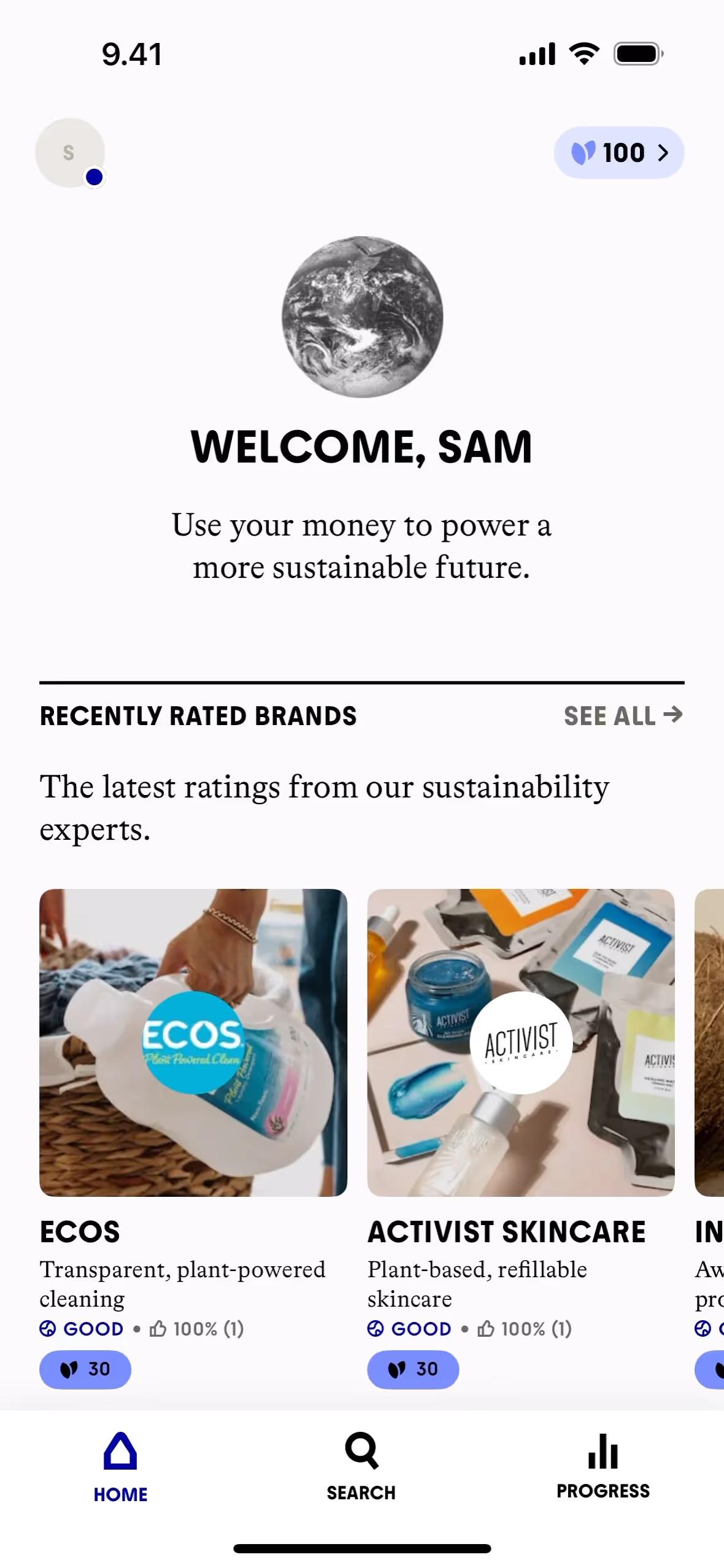
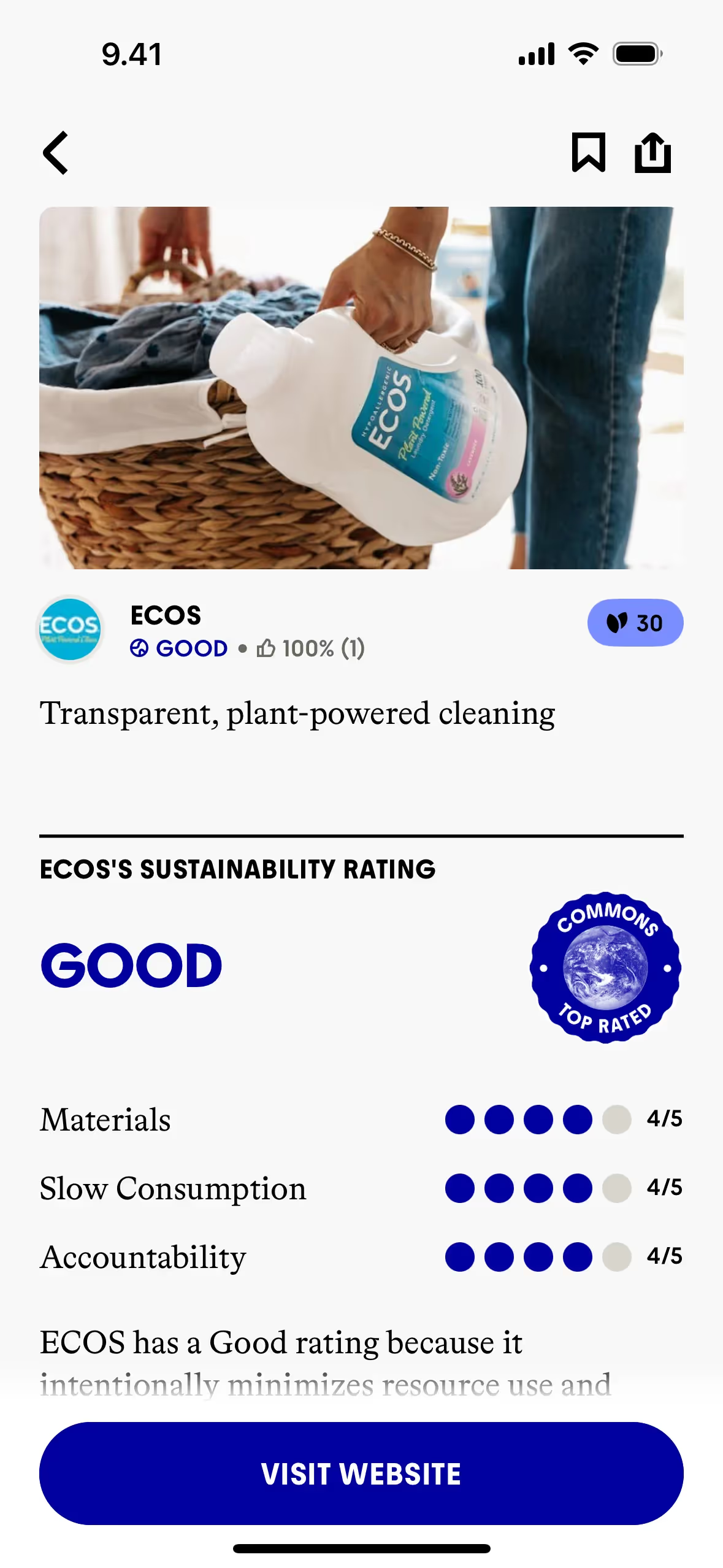
While not as widespread as other neutrals, deep charcoals like Carbon Flint are used by brands such as Commons to project a modern yet grounded identity. Its relative rarity makes it a distinctive choice for products aiming to appear both serious and approachable.
Use the tools below to explore curated palettes, test color contrast for accessibility, and preview Carbon Flint in real UI components from leading brands.
Using Carbon Flint color codes
The hex code for Carbon Flint is #434A52, a standard for web-based projects. However, to maintain color consistency across different media, you'll need to translate this value into other color models.
For instance, RGB (Red, Green, Blue) is fundamental for digital displays, defining colors through light, while CMYK (Cyan, Magenta, Yellow, Key/Black) is the go-to for print materials. Other models like HSL (Hue, Saturation, Lightness) offer a more intuitive way to make adjustments in your design software.
To help you get started, we've converted Carbon Flint's #434A52 into a range of popular formats. Simply copy the code you need from the list below.
Analogous
Analogous colors are neighbors on the color wheel. For Carbon Flint, this creates a harmonious and serene palette, offering a sense of visual cohesion.
Complementary
Complementary colors are direct opposites on the color wheel, creating the strongest contrast. Paired with Carbon Flint, they make for a bold, vibrant palette.
Split Complementary
A split complementary scheme pairs Carbon Flint with the two colors adjacent to its direct opposite, creating a vibrant yet harmonious color palette.
Triadic
A triadic scheme uses three colors equidistant on the color wheel. See how Carbon Flint pairs with other hues for a balanced, high-contrast palette.
Tetradic
Tetradic color schemes use two complementary pairs to create rich, balanced palettes. Explore combinations that build upon the foundation of Carbon Flint.
Square
A square color scheme uses four colors evenly spaced on the color wheel. With Carbon Flint as the base, this creates a vibrant, high-contrast palette.
Text Color
Background Color
Your Catchy Large Text Goes Here
Shades
Adding black to Carbon Flint creates its shades, which are darker and add visual weight.
Tints
By adding white to Carbon Flint, you create tints—lighter variations with a softer appearance.
Tones
Tones of Carbon Flint are created by adding gray, resulting in softer, muted variations.
Hues
Hues are variations of Carbon Flint, altering its intensity or temperature for different visual effects.

Never run out of inspiration again.
Use Mobbin for free as long as you like or get full access with any of our paid plans.