Blue Violet
Meet Blue Violet, hex code #8A2BE2. This color commands attention with its rich, electric quality, sitting at the vibrant intersection of cool blue and warm purple. Its striking intensity makes it a memorable choice for any designer's palette, offering a unique and energetic visual statement.
What color is Blue Violet?
Blue Violet is a vibrant tertiary color that sits squarely between blue and violet on the color wheel. It possesses a cool temperature, characterized by strong blue undertones that give it a crisp, electric quality distinct from warmer, red-based purples.
This shade is a rich, saturated hue that balances the calmness of blue with the energy of violet, resulting in a color that feels both deep and luminous.
What is the meaning of the color Blue Violet?
Blue Violet, or #8A2BE2, marries the tranquility of blue with the passion of violet, creating a hue that suggests deep contemplation and spiritual awareness. It often inspires feelings of creativity and imagination, making it a color of introspection and artistic expression.
Historically associated with nobility and power, this color carries an air of luxury and sophistication. It symbolizes ambition and wisdom, offering a sense of dignity and purpose in visual communication.
How can I effectively use Blue Violet in my UI design?
Blue Violet, with its hex code #8A2BE2, is a strong choice for accents that command attention. Use it for key interface elements like buttons, links, or notification badges to guide the user's eye. For a balanced composition, pair it with clean neutrals such as off-white or dark charcoal. To create a more expressive palette, consider a triadic scheme with shades of green and orange, or an analogous one with adjacent blues and magentas for a harmonious feel.
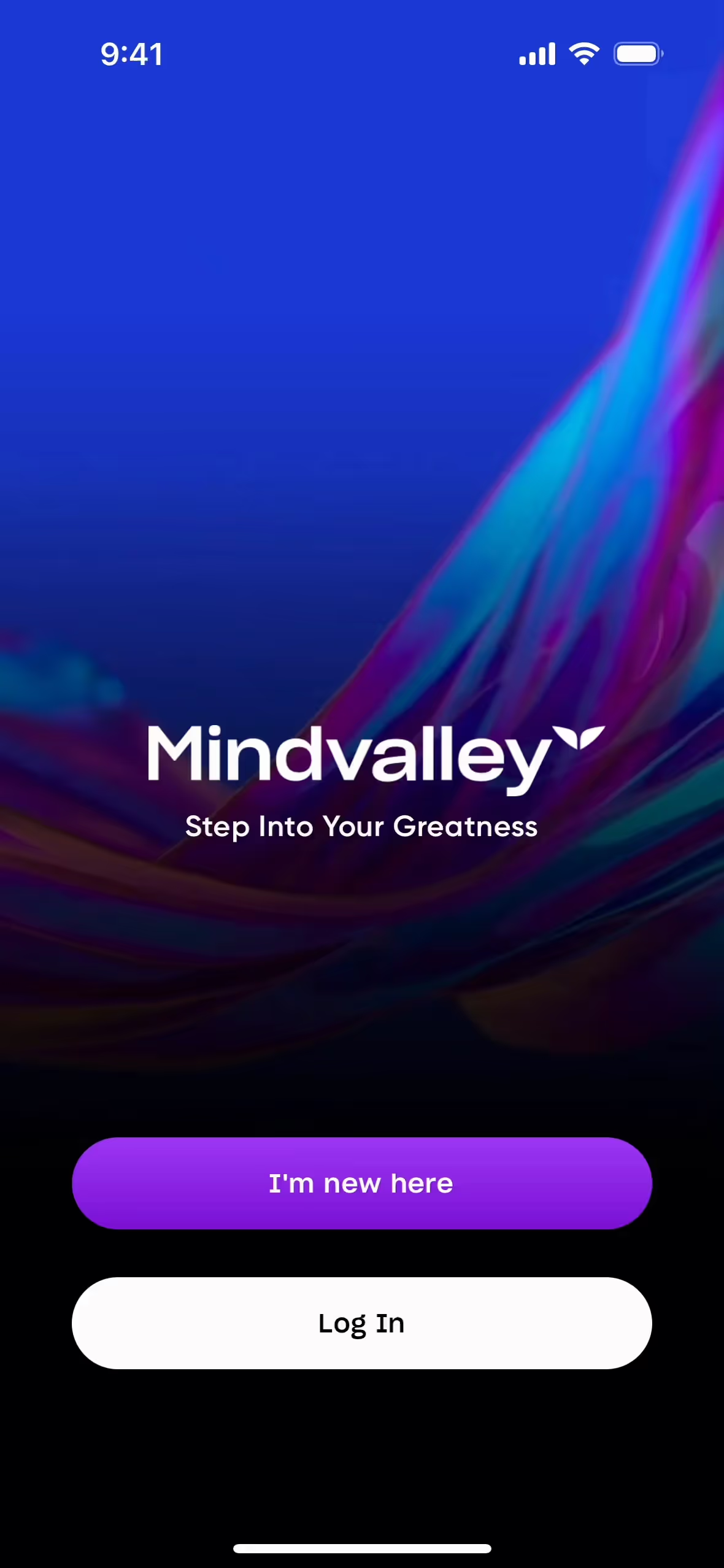
While not a staple in every corporate palette, this vibrant purple appears in the branding of companies like Canva, Jitter, and Mindvalley. Its selective use suggests that brands employing Blue Violet aim for a memorable and creative identity. Choosing a less frequent color can be a strategic move to differentiate a product in a crowded market.
To see how Blue Violet works in practice, use the tools below. You can explore curated palettes, check color contrast ratios for accessibility compliance, and preview #8A2BE2 applied to UI components from well-known applications.
How do I use Blue Violet color codes?
Using Blue Violet in your designs is straightforward with its hex code, #8A2BE2. This code is the standard for web design, directly specifying the color for CSS and HTML, making it simple to apply across digital interfaces.
For different applications, you may need to convert #8A2BE2. RGB (Red, Green, Blue) values are used for digital screens, defining color by mixing light. For print projects, CMYK (Cyan, Magenta, Yellow, Key/Black) values are critical as they dictate ink combinations on paper. Other models like HSL (Hue, Saturation, Lightness) offer more intuitive ways to modify the color.
To help you get started, we've converted #8A2BE2 into a range of popular formats. You can find and copy these values for your own projects below.
Analogous
Analogous colors sit side-by-side on the color wheel. Paired with Blue Violet, they produce a cohesive and calming effect, ideal for serene designs.
Complementary
Complementary colors are opposites on the color wheel. When paired with Blue Violet, they create a high-contrast, visually striking effect that commands attention.
Split Complementary
A split complementary scheme for Blue Violet uses the two colors adjacent to its direct opposite, offering a vibrant yet balanced high-contrast palette.
Triadic
Triadic schemes use three colors equally spaced on the color wheel, creating a vibrant, high-contrast palette with Blue Violet as a base.
Tetradic
Formed by a rectangle on the color wheel, a tetradic scheme gives Blue Violet three companion colors, creating two complementary pairs.
Square
A square color scheme uses four colors evenly spaced on the color wheel. With Blue Violet as the base, this combination produces a vibrant, high-contrast palette.
Text Color
Background Color
Your Catchy Large Text Goes Here
Shades
Shades are created by adding black to Blue Violet, giving the color more depth and weight.
Tints
Tints of Blue Violet are made by mixing in white for a lighter, softer feel.
Tones
Tones are created by mixing Blue Violet with gray, resulting in softer, less saturated variations.
Hues
Hues are variations of Blue Violet, differing in intensity or temperature to alter mood.







Never run out of inspiration again.
Use Mobbin for free as long as you like or get full access with any of our paid plans.