Beige Calm
Meet Beige Calm (#C6BEB5), a sophisticated neutral that defies simple categorization. Its subtle blend of gray and warm undertones creates a quiet depth, offering a versatile foundation that feels both organic and refined, making it a compelling choice for modern palettes.
What color is Beige Calm?
Beige Calm is a soft, warm neutral that sits in the greige family, characterized by a subtle grayish-green undertone.
This desaturation gives it an earthy complexity, distinguishing it from a more standard, yellow-based beige.
What is the meaning of the color Beige Calm (#C6BEB5)?
The color Beige Calm (#C6BEB5) evokes a sense of quiet sophistication and tranquility, offering a feeling of stability and comfort.
It symbolizes a return to simplicity and the organic, providing a foundation of warmth and timelessness in design.
How can I use the color Beige Calm in my UI design?
In UI design, Beige Calm works beautifully as a sophisticated base. To maintain legibility and create a clear visual hierarchy, pair #C6BEB5 with high-contrast colors for text and interactive elements. Consider deep charcoal grays, rich espresso browns, or even muted jewel tones like sapphire for a pop of color.
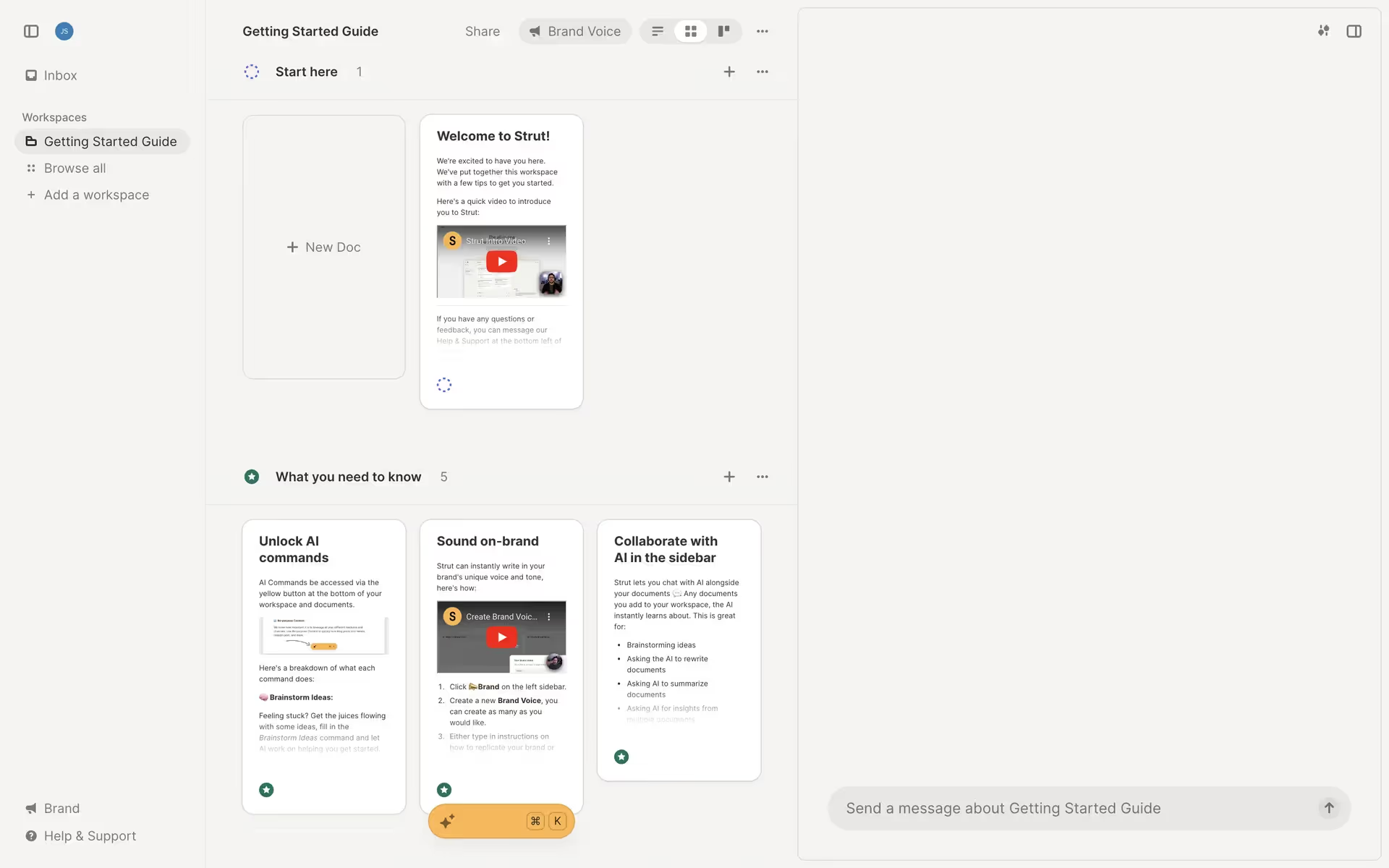
You won't find many mainstream brands building their identity around Beige Calm, which presents a clear opportunity for a product to stand out with a unique and refined aesthetic. The brand Strut, for example, uses a similar earthy palette to build a distinctive visual identity.
To see how #C6BEB5 performs in practice, use the tools below to explore curated palettes, test color contrast for accessibility, and preview Beige Calm in real UI components from top brands.
Using Beige Calm color codes
Using Beige Calm in your projects starts with its hex code, #C6BEB5. This is your direct reference for web design and most digital applications, specifying the exact shade for CSS, HTML, and various design tools.
While a hex code is standard for screens, you'll need other formats for different mediums. RGB values define the mix of red, green, and blue light for digital displays, while CMYK values correspond to cyan, magenta, yellow, and black ink for print work. Other models like HSL (Hue, Saturation, Lightness) offer a more intuitive way to make adjustments.
To help you apply Beige Calm across any project, we've converted #C6BEB5 into a range of popular formats. You can find and copy the exact codes you need right below.
Analogous
Analogous colors are found next to each other on the color wheel, creating a harmonious and serene palette when paired with Beige Calm.
Complementary
Complementary colors sit opposite Beige Calm on the color wheel. Pairing them creates a striking, high-contrast visual effect for your designs.
Split Complementary
A split complementary scheme for Beige Calm pairs it with the two colors neighboring its complement, offering a sophisticated and visually interesting combination.
Triadic
A triadic scheme uses three equidistant colors from the color wheel. When built around Beige Calm, the result is a balanced yet dynamic palette.
Tetradic
A tetradic scheme uses two pairs of complementary colors, forming a rectangle on the color wheel. See how Beige Calm anchors these vibrant palettes.
Square
A square color scheme pairs Beige Calm with three other colors, all equidistant on the color wheel, creating a vibrant, high-contrast palette.
Text Color
Background Color
Your Catchy Large Text Goes Here
Shades
Adding black to Beige Calm creates darker shades, introducing a sense of depth and weight.
Tints
Tints of Beige Calm are created by mixing in white, resulting in softer, lighter variations.
Tones
Tones are created by adding gray to Beige Calm, softening its saturation for a muted effect.
Hues
Hues are variations of Beige Calm that differ in intensity or temperature, subtly shifting the mood.
Never run out of inspiration again.
Use Mobbin for free as long as you like or get full access with any of our paid plans.