Beach Shack
Meet Beach Shack (#EDD6C5), a color that brings a subtle warmth to any palette. Its striking quality lies in its muted elegance—a soft neutral that carries a hint of sun-bleached character without overwhelming the design.
What color is Beach Shack?
Beach Shack is a soft, warm beige with distinct peachy undertones.
It carries the muted warmth of sun-bleached driftwood, sitting comfortably between a pale tan and a dusty rose.
What meaning does the color Beach Shack (#EDD6C5) carry in design?
Beach Shack evokes the serene, sun-drenched ease of a coastal retreat.
Its essence is one of approachable warmth and organic simplicity, offering a sense of grounding and quiet authenticity.
How can I use the color Beach Shack in my UI design?
Beach Shack, with its hex code #EDD6C5, works beautifully as a primary background color to create a warm and inviting atmosphere. For sufficient contrast and readability, pair it with deep, earthy tones like dark chocolate browns or charcoal grays. It also serves as a sophisticated accent when set against a clean, off-white canvas, adding a touch of softness to minimalist interfaces.
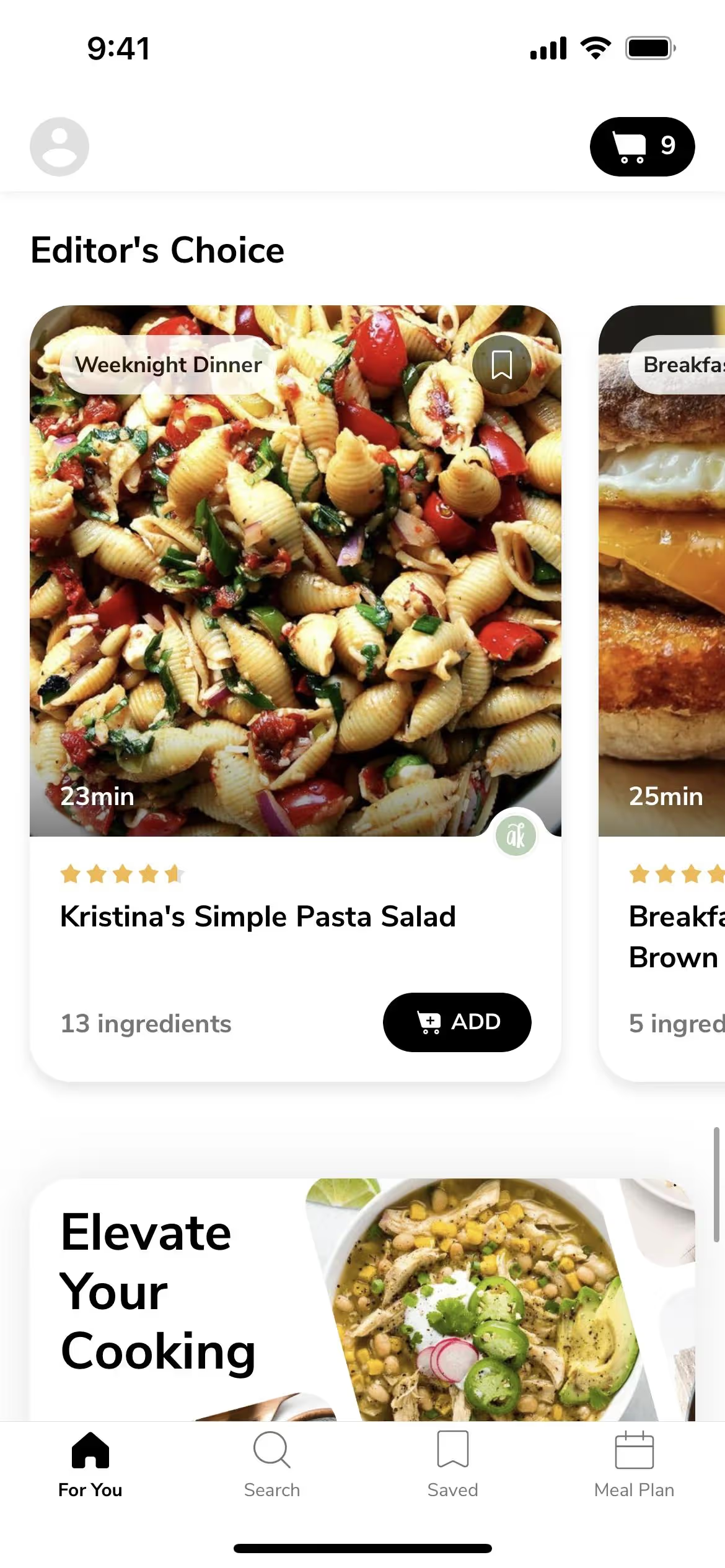
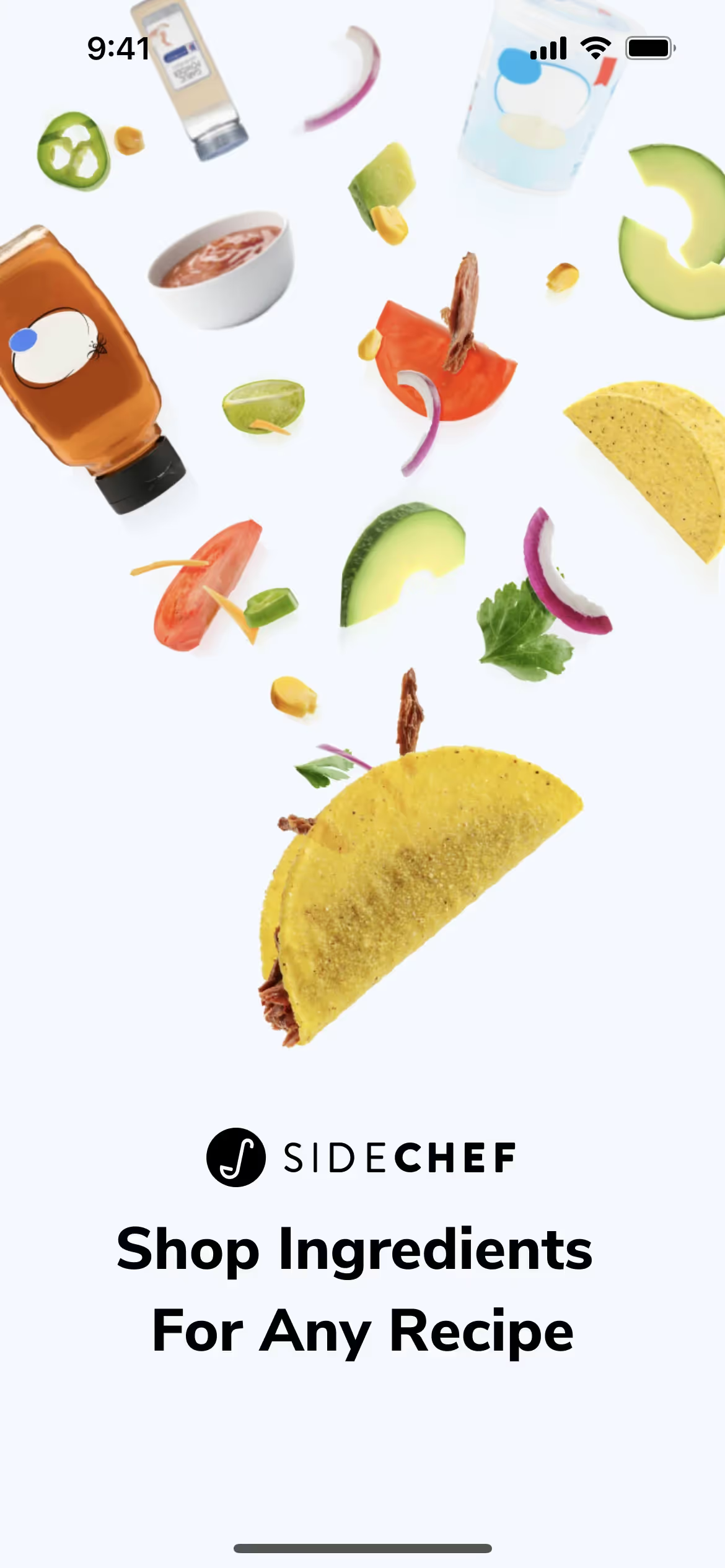
Few brands have adopted a color quite like Beach Shack, which presents a clear opportunity for differentiation. A brand like SideChef uses a similar palette to create a friendly and organic feel. Using #EDD6C5 can help a product establish a distinct visual identity that feels both modern and comforting.
Explore our curated palettes, test your color combinations for accessibility with the contrast checker, and preview Beach Shack in real UI components from top apps using the tools below.
Using Beach Shack color codes
Using the Beach Shack color code starts with its hexadecimal value, #EDD6C5, which is standard for web development. However, your project might require a different color model depending on the medium, whether it's a digital screen or a printed piece.
For instance, RGB (Red, Green, Blue) values are fundamental for digital displays, defining color through light. In contrast, CMYK (Cyan, Magenta, Yellow, Key/Black) is the go-to for print. Other models like HSL (Hue, Saturation, Lightness) offer a more intuitive way to make adjustments during the design process.
To help you get started, we've converted Beach Shack's #EDD6C5 into a variety of common formats. You can find and copy the exact codes you need for your tools below.
Analogous
Analogous schemes pair colors adjacent on the color wheel. Using Beach Shack as the primary hue, these palettes feel cohesive and exceptionally calm.
Complementary
To find a complementary color for Beach Shack, look directly opposite it on the color wheel. This pairing produces a vibrant, high-contrast combination.
Split Complementary
For a more nuanced contrast, a split complementary palette pairs Beach Shack with the two colors neighboring its opposite on the color wheel.
Triadic
A triadic palette combines three colors from equidistant points on the color wheel, creating a vibrant and balanced look with Beach Shack as a base.
Tetradic
Tetradic palettes use two pairs of complementary colors, creating a rich harmony. Here are some combinations that feature Beach Shack as the base.
Square
Square color schemes pair Beach Shack with three other hues, all equidistant on the color wheel, for a balanced yet highly contrasting effect.
Text Color
Background Color
Your Catchy Large Text Goes Here
Shades
Shades of Beach Shack are created by adding black, resulting in darker, weightier tones.
Tints
Tints of Beach Shack are lighter versions created by adding white for a softer feel.
Tones
Tones are created by adding gray to Beach Shack, resulting in softer, more muted versions.
Hues
Hues are variations of Beach Shack, sharing its base color but with different intensity or temperature.

Never run out of inspiration again.
Use Mobbin for free as long as you like or get full access with any of our paid plans.