Apricot
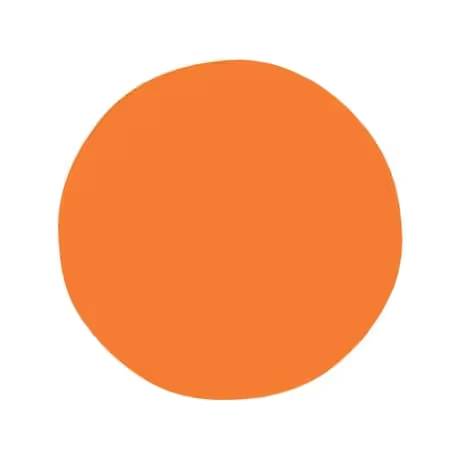
Meet Apricot (#FBCEB1), a color that balances gentle warmth with a subtle, luminous quality. Its soft, peachy undertones offer a refreshing alternative to standard neutrals, providing a quiet vibrancy that can illuminate a design palette without overwhelming the composition.
What color is Apricot?
Apricot is a pale, yellowish-orange hue that captures the soft warmth of the fruit it's named after. It sits on the warmer side of the spectrum, comfortably between orange and yellow.
With its soft, muted undertones, the color has a gentle, approachable quality distinct from more saturated oranges. This lightness gives it an almost pastel appearance, allowing for subtle variations depending on its application.
What is the meaning of the color Apricot (#FBCEB1)?
The color Apricot (#FBCEB1) radiates a soft warmth and gentle energy. It evokes feelings of joy, optimism, and comfort, making it an inviting and nurturing choice in design.
Symbolically, Apricot represents youthfulness and new beginnings. Its sweet and pleasant nature suggests nourishment and a sense of well-being.
How should I use Apricot (#FBCEB1) in UI design?
In UI design, Apricot (#FBCEB1) works beautifully as a warm accent color. For strong visual hierarchy, set it against deep blues or charcoal grays to ensure readability. For a softer feel, pair it with earthy tones like terracotta and cream to build an analogous color scheme.
While not a common primary color for brands, its rarity can make a design more distinctive. Thrive Market, for instance, uses a similar hue to cultivate a wholesome and approachable feel.
Use the tools below to explore curated palettes, test color contrast for accessibility, and preview Apricot in real UI components from top brands.
Using Apricot color codes
Working with the color Apricot begins with its hex code, #FBCEB1. This six-digit code is the standard for specifying colors on the web, but its application isn't limited to just digital screens.
Different projects require different color models. Your hex code can be translated into RGB (Red, Green, Blue) values for screen-based designs or CMYK (Cyan, Magenta, Yellow, Key/Black) for physical printing, ensuring color consistency across mediums. Other formats like HSL, LAB, and XYZ provide alternative ways to define and adjust the color.
To get you started, we’ve converted #FBCEB1 into a range of popular formats below, ready for you to copy and use in your projects.
Analogous
Analogous colors are found next to Apricot on the color wheel. This combination creates a harmonious and serene palette, perfect for a tranquil design.
Complementary
Complementary colors sit directly opposite each other on the color wheel. When paired with Apricot, they create a high-contrast, visually striking combination.
Split Complementary
This scheme offers a more nuanced harmony, pairing Apricot with the two colors that sit adjacent to its direct complement on the wheel.
Triadic
A triadic color scheme uses three colors equally spaced on the color wheel. With Apricot, this creates a vibrant yet balanced high-contrast palette.
Tetradic
Tetradic color schemes use two pairs of complementary colors. For Apricot, this creates a bold palette with maximum color variation and built-in harmony.
Square
A square color scheme uses four colors equidistant on the color wheel. With Apricot as the base, this creates a vibrant, high-contrast palette.
Text Color
Background Color
Your Catchy Large Text Goes Here
Shades
Shades of Apricot are created by adding black, resulting in darker tones with more weight.
Tints
Tints are lighter variations of Apricot, created by adding white for a softer effect.
Tones
Tones of Apricot are created by adding gray, which mutes the color for a softer effect.
Hues
Hues are variations of Apricot, sharing its base but differing in intensity and temperature.



Never run out of inspiration again.
Use Mobbin for free as long as you like or get full access with any of our paid plans.